Systech
Systems & Technology in Music, Inc.
 If you were a musician during the 1970s, searching for your own unique sound, you might have encountered some of the nifty effects devices made by a small but vital Kalamazoo-based manufacturing firm called Systems & Technology in Music, Inc., better known as Systech. But if you’ve never heard of them, it’s no surprise. Systech did not have huge factory facilities, there were no billboards, no TV ads, and they had surprisingly few employees. But for a hot minute during the 1970s, the products they invented and manufactured came to be used and revered by working musicians worldwide.
Moog Music
Systems & Technology in Music, Inc. (Systech) was the brainchild of Greg Hockman, a music fan and tech innovator from Carnegie, Pennsylvania. After studying biology and music at Lycoming College in Williamsport, Pennsylvania, Hockman became associated with Robert Moog, inventor of the Moog Synthesizer. He had seen Moog lecture at Penn State, and the two later met at the National Association of Music Merchants (NAMM) trade show in Chicago. Hockman joined Moog’s company as a sales rep in 1971 and soon played a significant role in the development and marketing of Moog’s groundbreaking new musical instrument, the Minimoog. According to Brian Kehew of the Bob Moog Foundation, “Greg’s assigned role was ‘sales,’ but he also picked up engineering and design practices at the factory, watching and later ‘stuffing’ circuit boards full of parts, and assembling the final product.”
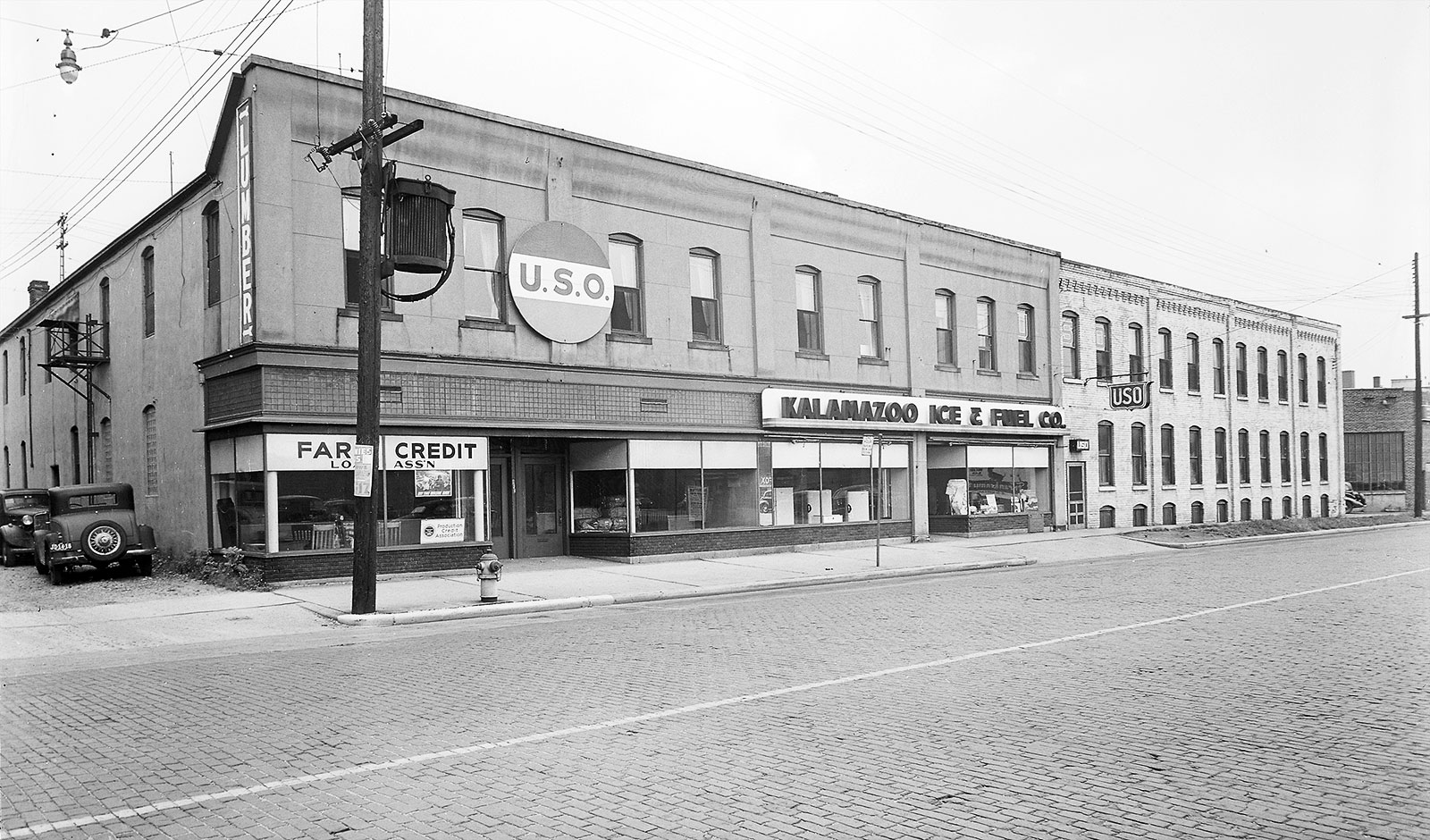 Kalamazoo Ice & Fuel Co., 9 September 1944. Photographed by Ward Morgan. Courtesy, WMU Archives & Regional History Collections
Sound Factory Inc.
Meanwhile, Kalamazoo music teacher Charlie Wicks and Chicago sound engineer Bryce Roberson launched a new business venture called Sound Factory Incorporated in the former Kalamazoo Ice & Fuel Company building on Kalamazoo Avenue. Wicks opened a musical instrument shop on the first floor and began offering classes in music creation (guitars, drums, synthesizers, etc.), while Roberson set up his professional 16-track recording studio in a room upstairs. Together, they created a space where like-minded musicians could share ideas and experiment with music-related technology.
“Because of the brilliance of the principals, Kalamazoo became a Mecca for musicians from Detroit, Chicago, and beyond.”
— West Mich Music Hysterical Society
During the summer of 1972, Greg Hockman was working as a sales representative for Moog when he stopped in Kalamazoo to make a few sales calls. To be precise, it was the afternoon of July 5th, the same day that the Kalamazoo Symphony Orchestra was about to begin its outdoor “Starlight Concert” series with a program featuring jazz musicians Dave Brubeck and Gerry Mulligan. When Hockman visited the Sound Factory that afternoon, Wicks and his cohorts were busy preparing their newly crafted PA system, which would be used for the first time at the concert later that evening atop the Gilmore Brothers parking ramp.
Systems & Technology in Music, Inc.
As Moog’s business grew, Hockman moved his family to Kalamazoo, where he could better focus his efforts on sales in the Midwest. “His territory was most of the Northeast and upper Midwest,” notes Kehew, “and he drove over 120,000 miles across 17 states in a little over one year.” But Hockman eventually grew weary of life on the road and, in early 1973, he left Moog Music and formed Systems & Technology in Music, Inc. Hockman rented space on the second floor of the Sound Factory building, across the hall from Bryce Roberson’s (a.k.a. Uncle Dirty’s) Sound Machine Studios and began designing and outfitting electronic music labs at several colleges, including the one he designed for Professor Ramon Zupko at the WMU School of Music. Hockman would continue building and repairing synthesizers, tape machines, and mixers until, as former engineering director Scott Burnham puts it, he “decided to enter the phase shifter wars.”
“Phase Shifter Wars”
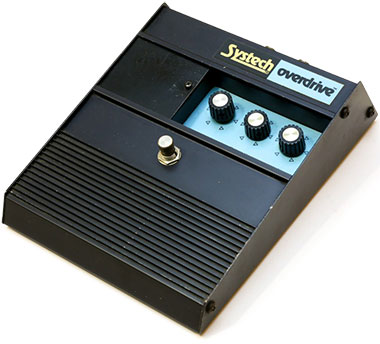 Despite formidable competition, Systech became widely recognized within the industry for its innovative sound processing pedals and devices, including phase shifters, flangers, distortion pedals, and the like. According to Burnham, the first such device they manufactured was called the Kuai, said to be “one of the most unusual phase-based effects ever made” (Effects Database). It was built into a pedal that Bigsby (yet another Kalamazoo-based guitar accessory manufacturer) was making for Fender. Subsequent models included the Systech Phase Shifter, Systech 4000A Flanger, Systech Overdrive, and the acclaimed Systech Harmonic Energizer. Systech devices were known for being both rugged and reliable.
Sound Factory Inc. was dissolved in 1974. Bryce Roberson continued to operate his recording studio, while Charlie Wicks went on to found Professional Consultants in Sound, Inc., otherwise known as Pro Co Sound, a highly acclaimed Kalamazoo-based manufacturer of cabinets and cables for the professional stage and sound reinforcement industry. Pro Co eventually got into the business of making guitar effects pedals, as well. Their famous Pro Co RAT distortion pedal (now manufactured by Neutrik) remains popular to this day among working musicians.
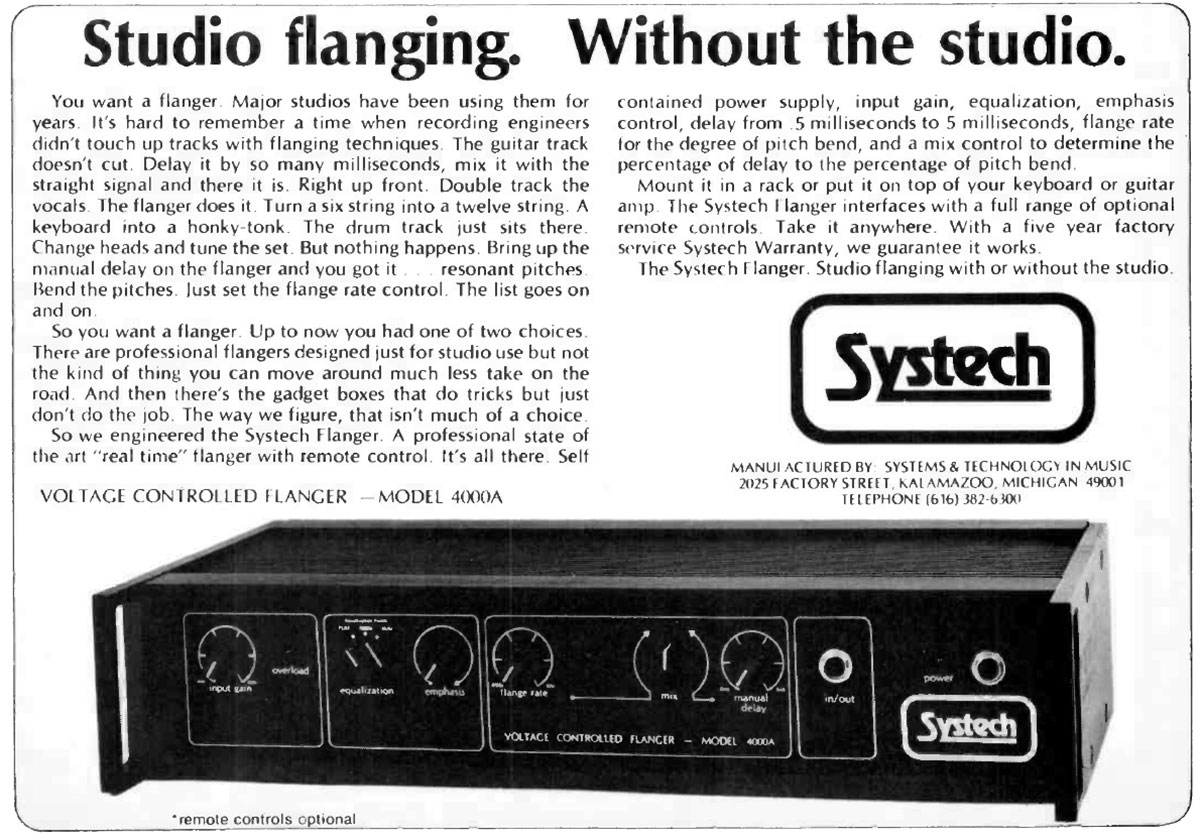 Modern Recording, Vol. 1, No. 6, August/September 1976
Soundcraft
By the mid-1970s, Systech was on its way to becoming a major player in the world of pro audio. Feeling that his firm was on the grow, Hockman moved his company to the former Rheem Manufacturing building at 2025 Factory Street.
In June 1974, Hockman attended the summer NAMM Convention/Music Expo in Houston, where he met veteran live-sound engineer Phil Dudderidge, a recent co-founder of Soundcraft, “one of the most innovative pro audio companies in the industry at the time” (NAMM). Dudderidge showed Hockman a prototype of his Series 1, a revolutionary new 16-track flight-cased stereo mixing console, designed especially for the growing touring band market, and the first of its kind in the industry. After a few months of testing, Systech became a Soundcraft dealer, and later the exclusive U.S. distributor for Soundcraft.
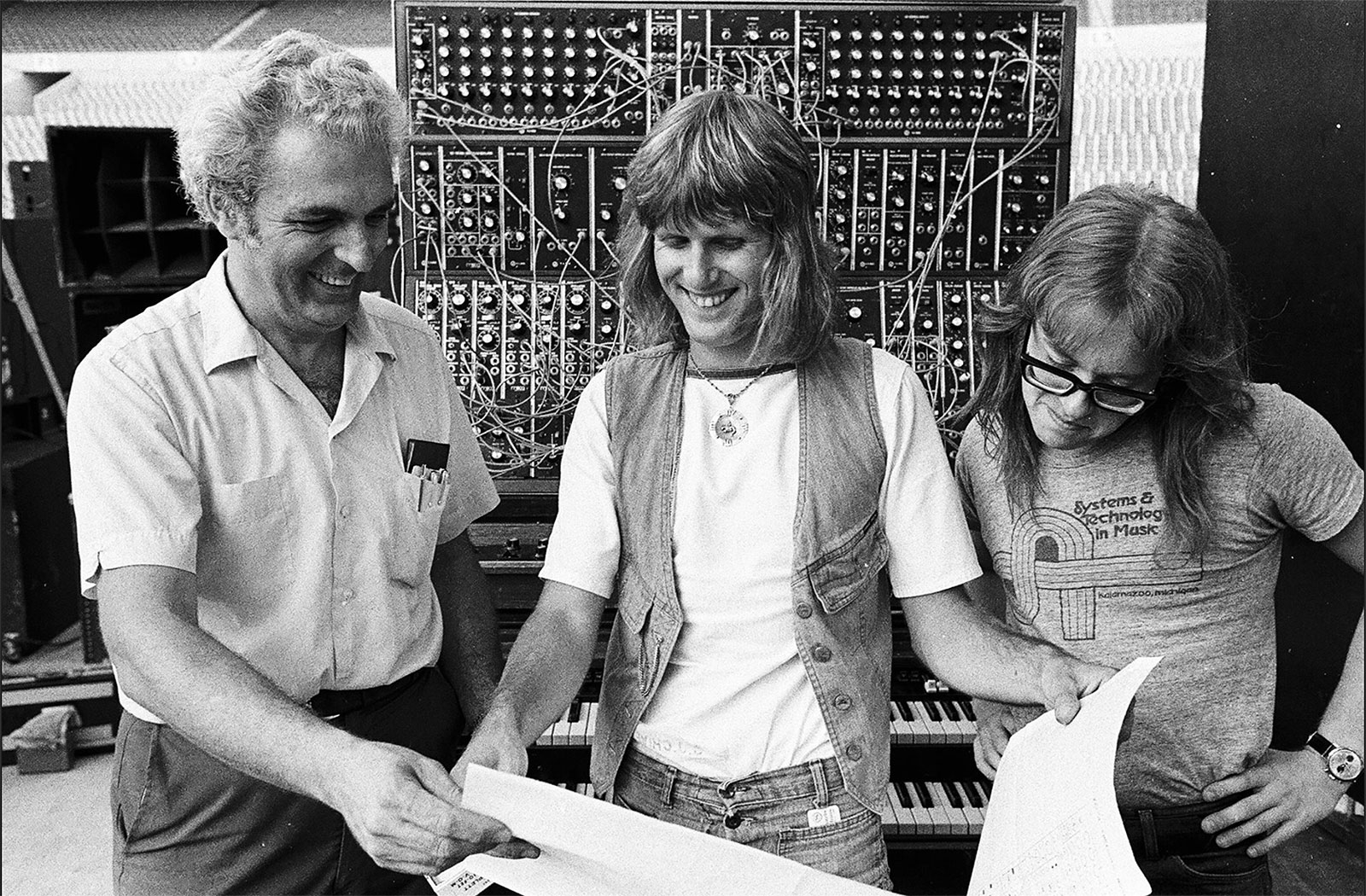 (l-r) Robert Moog, Keith Emerson, and Rich Walborn (of Systech), April 1974. Photo by Mark Hockman. The Bob Moog Foundation
Custom Work
Systech designed custom made touring gear for numerous musicians, while Hockman himself became well known within the industry as a synthesizer tech through his work with the likes of Rick Wakeman and the late Keith Emerson. That inconspicuous warehouse on Kalamazoo’s southeast side would serve as a staging area for Rick Wakeman’s keyboard setup as the band Yes prepared for its worldwide 1977 Going for the One Tour. A couple of years later, keyboardist Eddie Jobson and his band U.K. would use the same space as a rehearsal hall for their upcoming tour, which included a free show on the steps of Miller Auditorium.
 Greg Hockman in Hong Kong, 2018
Meanwhile, Systech had been struggling with the development of its own pro audio gear. By 1979, the company had ceased operation, and its assets were sold at auction in May that year. In the early 1980s, Greg Hockman became the director of marketing and product development for music products at Electro-Voice, a world-renowned audio equipment manufacturer. Since then, he’s worked with such industry giants as Walt Disney Imagineering, Avalon Sound, and V Audio Pro. Hockman, now retired, lives in Southern California, where he remains closely connected with the pro audio industry.
Written by Keith Howard, Kalamazoo Public Library staff, March 2026
Special thanks to Scott Burnham for his valuable information and insight.
Sources
Articles
“Recording studio goes into operation”
Kalamazoo Gazette, 13 June 1971, page 32 (B-16), column 3
“Starlight artists named”
Kalamazoo Gazette, 21 May 1972, page 35 (B-19), column 6
“‘Synthesizer Man’ at Western for workshop”
Kalamazoo Gazette, 28 April 1974, page 57 (C-12), column 4
Display ad (public auction)
Kalamazoo Gazette, 6 May 1979, page 72 (D-4), column 5
“MoogHistory: Brian Kehew explores rare Hockman photos”
Brian Kehew, Historical Consultant to the Bob Moog Foundation Archives, 1 December 2010
from https://moogfoundation.org/mooghistory-brian-kehew-explores-rare-hockman-photos/
Online Interviews
Phil Dudderidge (25 January 2014). NAMM Oral History Program
https://www.namm.org/library/oral-history/phil-dudderidge