The Fuller Manufacturing Co.
A Pioneer in the Michigan Automotive Industry
Fuller Brothers Washboard Factory
In 1885, George P. Fuller (1834-1901) and his three sons, Charles D. Fuller (b.1858), Frank D. Fuller (b.1863), and Fred A. Fuller (b.1868), began manufacturing washboards in Minneapolis. Business was good, but in 1888, the Fullers saw a brighter future in Kalamazoo and moved their firm to a brick building on North Pitcher Street near the Grand Rapids & Indiana Railroad line. The company was incorporated in 1889 as the Fuller Brothers Manufacturing Company. By then, the firm was producing some 35 different brands of washboards, including its most popular “Northern Queen,” a design patented by George Fuller.
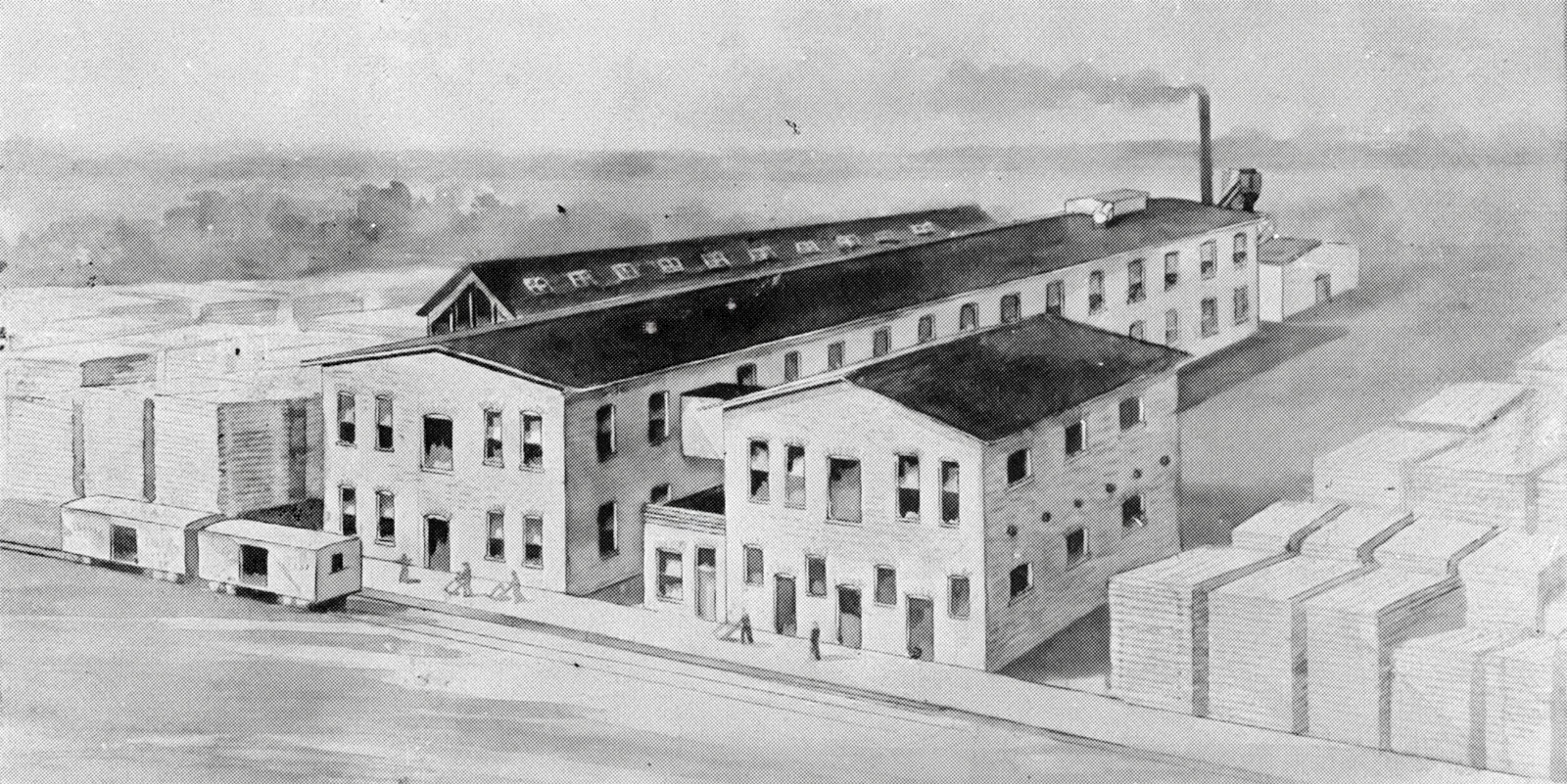 Fuller Brothers Manufacturing Company on North Pitcher Street, c.1892. Kalamazoo Public Library
In March 1893, the Fullers sold the firm to the American Washboard Company, a large Cleveland-based syndicate. George, Charles, and Fred remained in Kalamazoo, while Frank relocated to Chicago, where he became a representative for the Funk & Wagnalls publishing firm.
 Sanborn Fire Insurance Map from Kalamazoo, Michigan. Sanborn Map Company, Oct 1891. Kalamazoo Public Library / Library of Congress
Michigan Automobile Company
After his father’s death in 1901, Frank Fuller returned to Kalamazoo with sons Lawrence C. Fuller (b.1886) and Walter P. Fuller (b.1890), hoping to make it big in the “horseless carriage” industry. In 1902, Frank and his brother, Charles, joined Maurice and Clarence Blood as founding members of the Michigan Automobile Company, Ltd. But as a manufacturer of automobiles, the Kalamazoo-based firm didn’t last long. The Blood brothers moved on to form their own company, while the Fullers continued for a time under the Michigan Automobile Company banner, but shifted their focus toward building high-quality transmissions and clutches for other automobile and truck manufacturers.
 Michigan Automobile Co., N. Pitcher St. Sanborn Map Company, 1908. Kalamazoo Public Library / Library of Congress
Fuller & Sons Manufacturing Co.
In January 1913, the Fullers formed the Fuller & Sons Manufacturing Company as a successor to the Michigan Automobile Company. Moving forward, the newly reorganized firm would focus heavily on manufacturing transmissions and clutches for automobiles and trucks. The Fuller & Sons Manufacturing Company turned heads in the industry with its impressive display of products at the 1913 Chicago Automobile Show.
“Our product is principally transmission gears and clutches for motor cars and motor trucks. We are furnishing these essential parts to a large number of manufacturers, among them some of the most prominent in the industry.”
—Frank D. Fuller, Kalamazoo Gazette, 20 August 1915
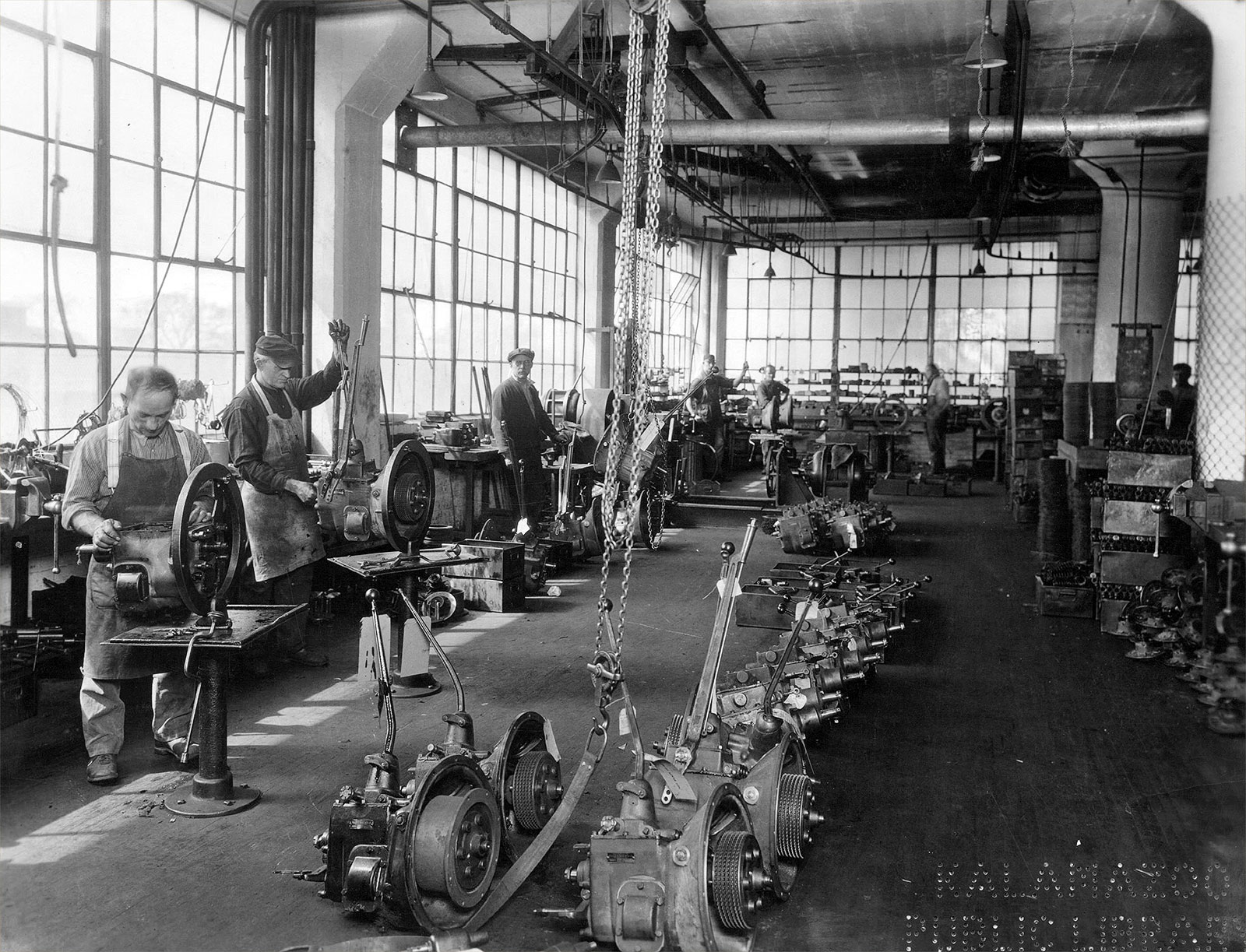 Fuller Manufacturing Company, “old assembling room,” photographed by Mamie L. Austin in 1934. The same photo was published in the Kalamazoo Gazette, 24 June 1934. Kalamazoo Public Library photo file P-50
By 1915, Fuller & Sons was one of five Kalamazoo firms manufacturing accessories for the growing automobile industry. But the Fullers had found their niche as designers and builders of precision truck transmissions, which were in high demand. In November 1915, the company landed its first major contract with a $198,000 order (roughly $6.3 million today) from the Republic Truck Company, while reportedly turning down a $400,000 order from another firm due to lack of capacity. By then, Frank D. Fuller was president and general manager, Lawrence C. Fuller was vice president, Walter P. Fuller was secretary, Dr. W.E. Upjohn was treasurer, and Samuel N. Biggerstaff was director.
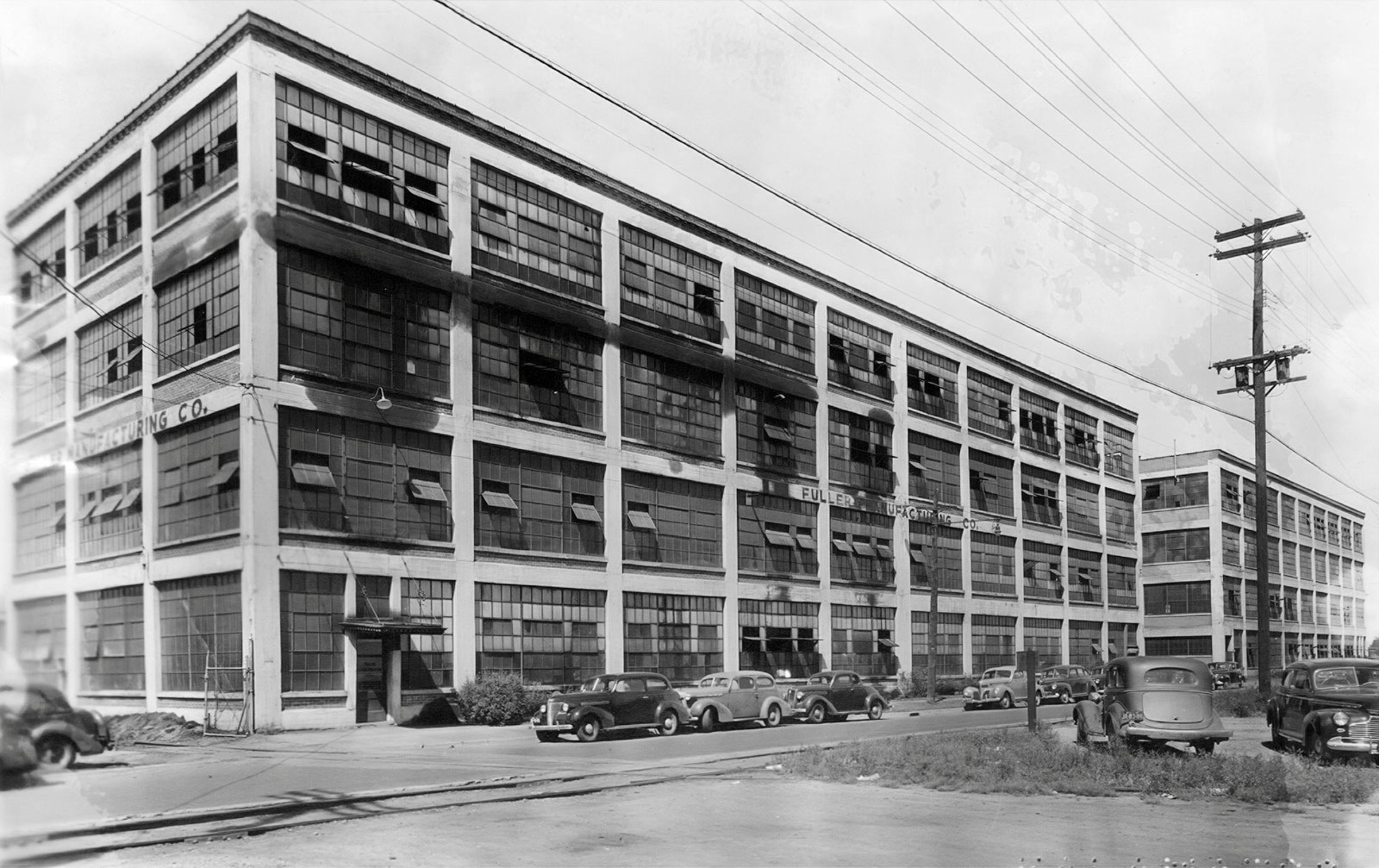 Fuller Manufacturing Company, 1418 N. Pitcher St., photographed by Mamie L. Austin in 1941. Kalamazoo Public Library photo file P-29
Fuller & Sons’ business grew from $75,000 in 1914, to $225,000 in 1915, to $700,000 in 1916, to $1.5 million in 1917 (roughly $37.8 million in today’s dollars). Fuller immediately began erecting a four-story $300,000 addition to its original plant at the corner of Pitcher and Prouty streets and was expecting to employ a workforce of some 400 hands. During the First World War, Fuller & Sons sent its engineer to Washington, D.C., to help design transmissions for military vehicles.
 Sanborn Fire Insurance Map from Kalamazoo, Michigan. Sanborn Map Company, 1932. Kalamazoo Public Library / Library of Congress
Despite shortages of raw materials encountered during the war, business boomed in 1919 with an 80% increase over the preceding year. By then, the company had outgrown its original brick building, built in 1888 for the Montgomery-Ward Company, and would replace it with a more modern and spacious concrete structure and separate foundry.
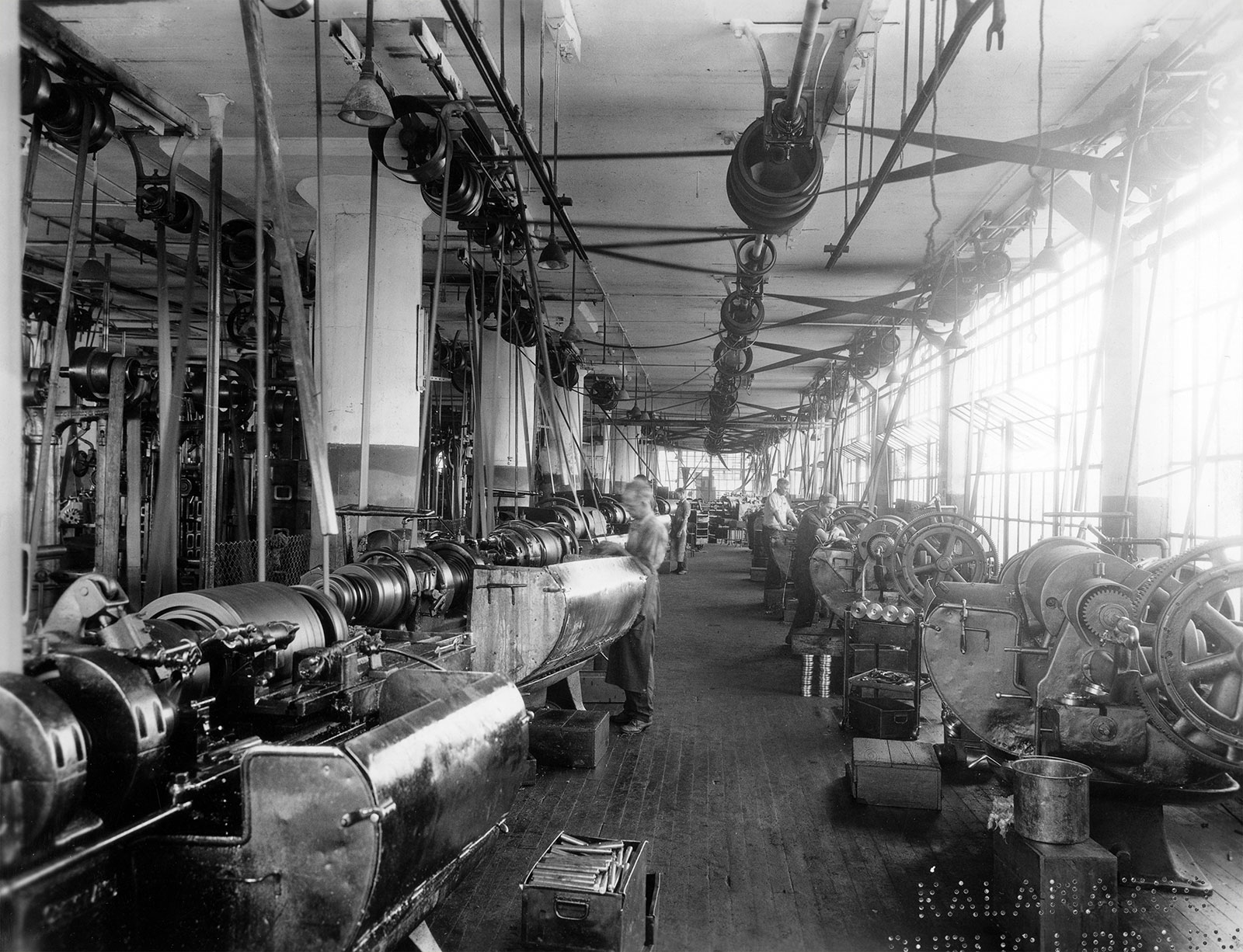 Fuller Manufacturing Company interior, photographed by Mamie L. Austin in 1936. Kalamazoo Public Library photo file P-47
By 1922, the company was producing 750 to 800 heavy duty truck transmissions per week, while receiving contracts in excess of $1 million annually. Fuller-made transmissions were sold to General Motors, International Harvester, White, and Mack, et al., for use in buses, trucks, taxicabs, and other commercial vehicles.
In 1928, Frank Fuller sold his interests in the company to the Unit Corporation of America and eventually moved to California, where he remained until his death in September 1958 at the age of 95.
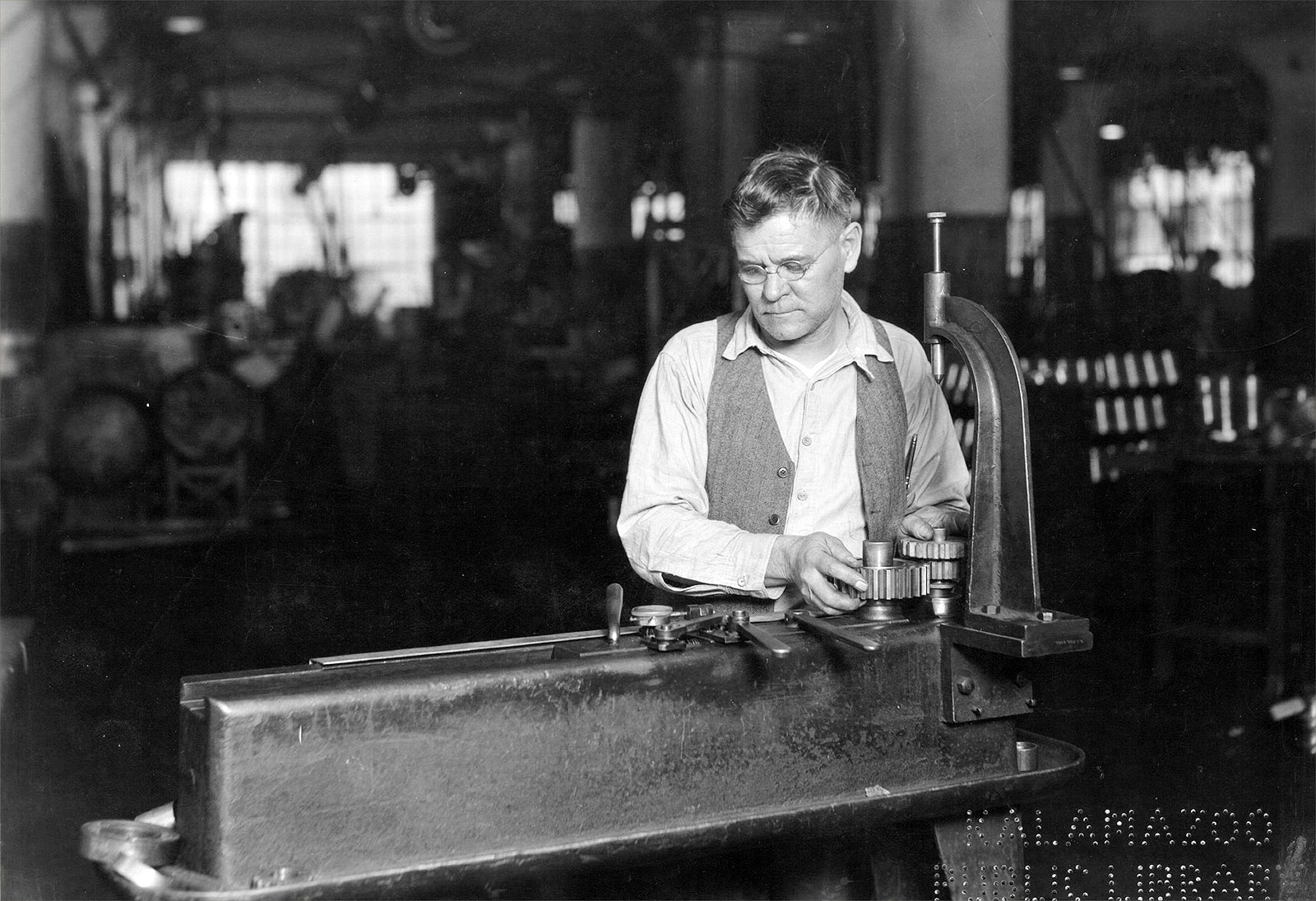 Fuller Manufacturing Company, gear testing machine, photographed by Mamie L. Austin in 1936. Kalamazoo Public Library photo file P-40
Fuller Manufacturing Co.
In 1933, the Fuller & Sons Manufacturing Company, successor to the Unit Corporation, was reorganized as the Fuller Manufacturing Company with J. Seton Gray as company president, J.H. Daggett as vice president, and Walter Peapples as secretary and treasurer. By then, the Fuller factory complex covered an entire city block. Despite a slowdown during the Great Depression, the company reported annual earnings in 1936 of more than $220,000. During the Second World War, Fuller Manufacturing supplied transmissions for the U.S. Army’s heavy trucks. Fuller workers were urged to “stick on the job and give all they have” (Gazette) while helping supply vehicles for American and Allied use.
“In brief, Fuller has made it possible for a truck to have gears that shift with ease comparable to a pleasure car, and gears as quiet. They were the first manufacturer of truck transmissions to arrive at this inevitable development.”
—Kalamazoo Gazette, 24 June 1934
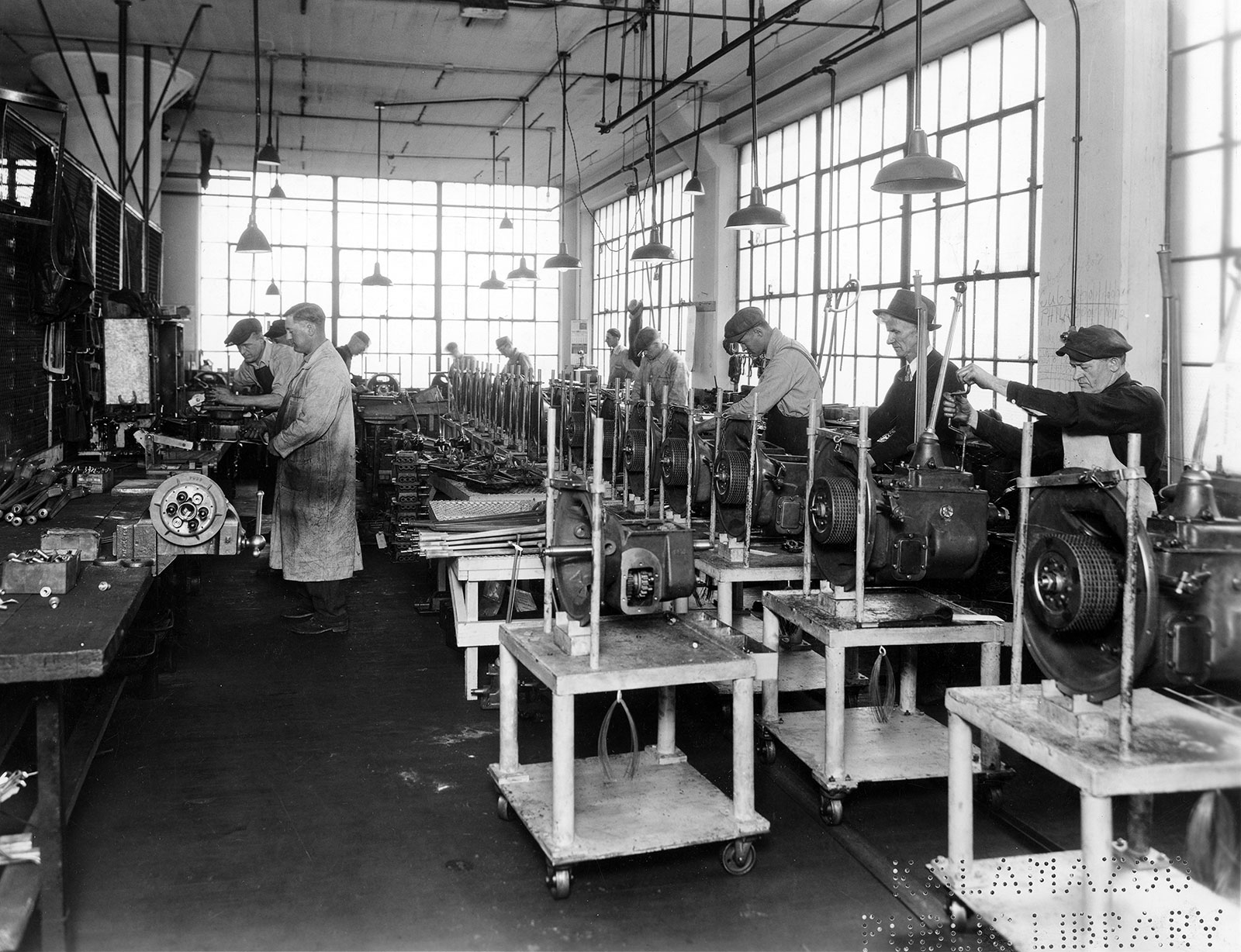 Fuller Manufacturing Company, “new assembling room,” photographed by Mamie L. Austin in 1936. Kalamazoo Public Library photo file P-56
Eaton Manufacturing Co.
In 1958, The Fuller Manufacturing Company was acquired by the Eaton Manufacturing Company of Cleveland. Fuller was to become a wholly owned subsidiary of Eaton, with no immediate changes planned for the Kalamazoo-based company. At that time, the firm employed 1,300 workers in Kalamazoo with sales of more than $31 million annually (the equivalent of $346 million today). After more than 50 years in business by then, Fuller was seen as a pioneer in the Michigan automotive industry. According to the Eaton Corporation, “Fuller introduced the Roadranger twin countershaft transmission several years after its acquisition by Eaton, which promptly became the standard for the heavy truck industry, and helped make Fuller the most profitable acquisition in Eaton’s history.”
“Although Eaton stopped making transmissions in Kalamazoo in 1981, it continued R&D, engineering, sales, marketing and administration at Galesburg. It is one of two Eaton Innovation Centers in North America.”
—MLive, 26 November 2008
Written by Keith Howard, Kalamazoo Public Library staff, July 2025
Sources
Books
Kalamazoo Illustrated
Frank C. Dayton, Chicago. 1892
H 977.418 D276, page 44
The history of Eaton Corporation 1911-1985
Owen Zuro, Eaton Corporation, Cleveland, Ohio, 1985
H 338.8 H673 (CEN), page 72-73 (Appendix V)
Articles
“Reorganized and incorporated”
Kalamazoo Gazette, 27 November 1889, page 8, column 2
“Fuller Bros. Manufacturing Co.”
Kalamazoo Gazette, 30 August 1892, page 4, column 1
“Sold out”
Kalamazoo Gazette, 28 March 1893, page 1, column 4
“A new corporation”
Kalamazoo Gazette, 5 April 1893, page 4, column 3
“Personals”
Kalamazoo Gazette, 4 July 1899, page 3, column 3
“More than an ordinary man”
Kalamazoo Gazette, 11 April 1901, page 2, column 2
“Funerals”
Kalamazoo Gazette, 13 April 1901, page 5, column 3
“Automobile concern changes its name”
Kalamazoo Gazette, 8 January 1913, page 8, column 4
“Magazine praises Kazoo exhibitors”
Kalamazoo Gazette, 6 February 1913, page 6, column 4
“The factories of Kalamazoo are all mentioned here”
Kalamazoo Gazette, 26 October 1913, page 22, column 4
“Fuller and Sons to erect big addition”
Kalamazoo Gazette, 20 August 1915, page 3, column 1
“$198,000 order for Kazoo firm”
Kalamazoo Gazette, 6 November 1915, page 1, column 4
“Fuller and Sons Manufacturing Company addition will be completed in spring”
Kalamazoo Gazette, 9 January 1916, page 8, column 2
“Sharp advances in prices of metal hit twenty-five Kalamazoo concerns”
Kalamazoo Gazette, 14 March 1916, page 2, column 1
“Fuller & Sons planning for big addition”
Kalamazoo Gazette-Telegraph, 11 September 1916, page 10, column 4
“Manufacture of auto parts and accessories in Kazoo shows phenominal[sic] growth”
Kalamazoo Gazette-Telegraph, 5 November 1916, page 16, column 3
“Fuller & Sons Mfg. Co. happy industrial family”
Kalamazoo Gazette, 4 February 1917, page 16, column 2
“Aids U.S. in its truck construction”
Kalamazoo Gazette, 11 August 1917, page 2, column 5
“Fuller plant is nearly complete”
Kalamazoo Gazette, 13 September 1917, page 7, column 4
“Building in 1917 totals $4,250,000”
Kalamazoo Gazette, 30 December 1917, page 1,18, column 3
“Fuller concern grows rapidly”
Kalamazoo Gazette, 21 September 1919, page 8, column 5
“Will provide jobs for over 1000 people”
Kalamazoo Gazette, 27 December 1919, page 1, column 7
“Business of Fuller and Sons increased 80 per cent”
Kalamazoo Gazette, 23 January 1920, page 18, column 7
“Fuller & Sons buy 10 acres”
Kalamazoo Gazette, 9 February 1920, page 1, column 7
“Fuller & Sons’ Co. plan another building”
Kalamazoo Gazette, 13 March 1920, page 2, column 4
“Fuller Company receives orders worth $1,000,000”
Kalamazoo Gazette, 3 May 1922, page 1,2 column 2,3
“Trucks provided quiet gears by Fuller Company”
Kalamazoo Gazette, 24 June 1934, page 47, column 3
“Fuller Company earnings gaining”
Kalamazoo Gazette, 3 November 1936, page 16, column 1
“Eaton moves to acquire Fuller. Would be on share trade plan”
Kalamazoo Gazette, 20 June 1958, page 1,2, column 1,2
“Fuller Co. founder dies in Pasadena”
Kalamazoo Gazette, 20 September 1958, page 13, column 1
Local History Room Files
History Room Subject file: Fuller Manufacturing Company
Patents
G.P. Fuller. Wash Board. (No Model.) No. 336,910. Patented 2 March 1886.
United States Patent and Trademark Office
George P. Fuller. Perforated wash-board. No. CA25202A. Patented 25 October 1886.
Canadian Patent Office
G.P. Fuller. Wash Board. (No Model.) No. 401,265. Patented 9 April 1889.
United States Patent and Trademark Office
George P. Fuller. Wash board. No. CA31436A. Patented 25 May 1889.
Canadian Patent Office