Flipside Records
1977-2001
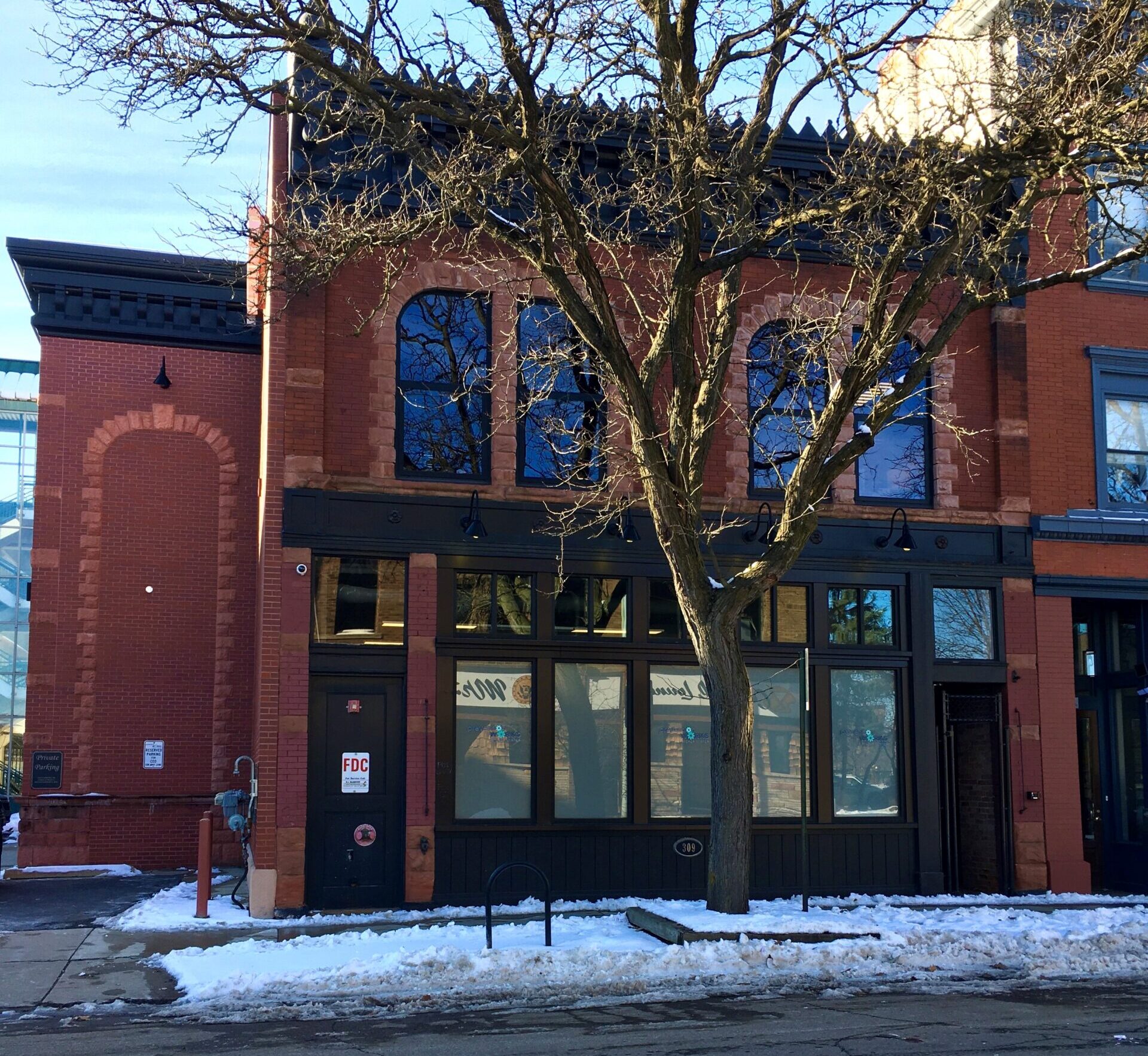 Former home of Flipside Records, 309 N. Burdick. Photograph: Ryan Gage
Once upon a time, before E-commerce all but eviscerated the independent, small business landscape, first giving way to corporate power (i.e. chain stores, Best Buy, Amazon), and then later to the development of post-Napster streaming platforms, local record stores once served as a cultural gateway, a special sanctuary to flip through new and used vinyl and compact discs in anticipation of discovering a long player gem, or a coveted deep cut. The record store was a place for browsing and discovery, often guided by passionate and knowledgeable sales clerks who provided curious customers with recommendations. Budget conscious consumers could spend hours flipping through the discount bins, all the while being exposed to a wide assortment of new and old music blaring from the store’s speakers.
 Flipside Advertisement, c. 1996
In 1977, one such local treasure was born when music enthusiast Neil Juhl opened Flipside Records at 249 N. Kalamazoo Mall. Juhl had been a music-loving collector while attending Michigan State University in East Lansing when the idea of starting his own store blossomed. Dubbed the “quintessential record store,” Juhl’s shop was situated on the southwest corner of N. Kalamazoo Mall and Eleanor Street, onetime home of the Uptown Theater and currently the Kalamazoo Valley Museum. Originally, the store was outfitted with only used records, but as time went on, customer demand suggested the need to have new titles on hand.
The store possessed a gritty, slapped together vibe that lent credibility to the knowing customer. Plastered with posters, concert flyers, T-shirts and various bits of merchandise (coffee mugs with a photograph of Sun Ra), the store’s interior ambiance perfectly reflected its primary customer base–college students, jazz aficionados, early embracers of hip-hop, punks, new wavers, and the occasional old-timer seeking out the sonic past.
“The place was unpolished and decidedly uncorporate, with employees who were passionate about music. In-store speakers were always blasting out something chain stores wouldn’t stock. Bob Marley T-shirts hung on the walls.”
Kalamazoo Gazette, 13 June 2001
Juhl moved the store across the street in 1990, where the store continued to flourish despite its downtown location. They sold concert tickets and held in-store performances, including Henry Rollins, The Flaming Lips and Fishbone. Customers tended to be representative of those seeking out less mainstream musical genres and artists not available at the chains and malls. The shop’s close proximity to the Rickman House ensured there was never a dull moment in or around the shop. The nearby skyscraper was known for housing a colorful cast of eccentric characters who frequented the Kalamazoo Mall. A 1989 article in the Kalamazoo Gazette summarized Juhl’s approach, and why he thought Flipside Records was a unique destination.
“Most of the stuff I have in this store, you won’t find at any of the malls,” Juhl said. “The stuff” includes jazz, reggae, blues, rap, and other music albums that Juhl said are probably too “esoteric” for the masses. “I like to have a variety of folks,” he said. “I like the Rickman folks (residents of the Rickman House for the indigent, located a block north of Flipside). I like the winos. I like the urban folks. I’m just comfortable down here.”
Kalamazoo Gazette, 13 August 1989
In the late 1980’s several of the businesses in close proximity to the corner of Eleanor and N. Burdick established the Hands Across Eleanor event. Flipside Records along with Missia’s Bar & Restaurant and Mr. President Restaurant & Cocktail Lounge reimagined the Hands Across America fundraising event that took place in 1986, but instead of a handholding spectacle, neighborly fun was the motivation. The idea blossomed into an annual block party that ran for nine years.
The late 1990s were a difficult time for the beloved store. A second location was opened in Oakwood Plaza in the spring of 1995 that focused on jazz and classical music. A coffee bar was added to the browsing experience, but the satellite location struggled to remain profitable as the big chains continued to sell below wholesale prices, cutting into the earnings of the mom and pop music stores. After the closing of the Oakwood location, the N. Burdick Street location carried on until they closed for good in 2001.
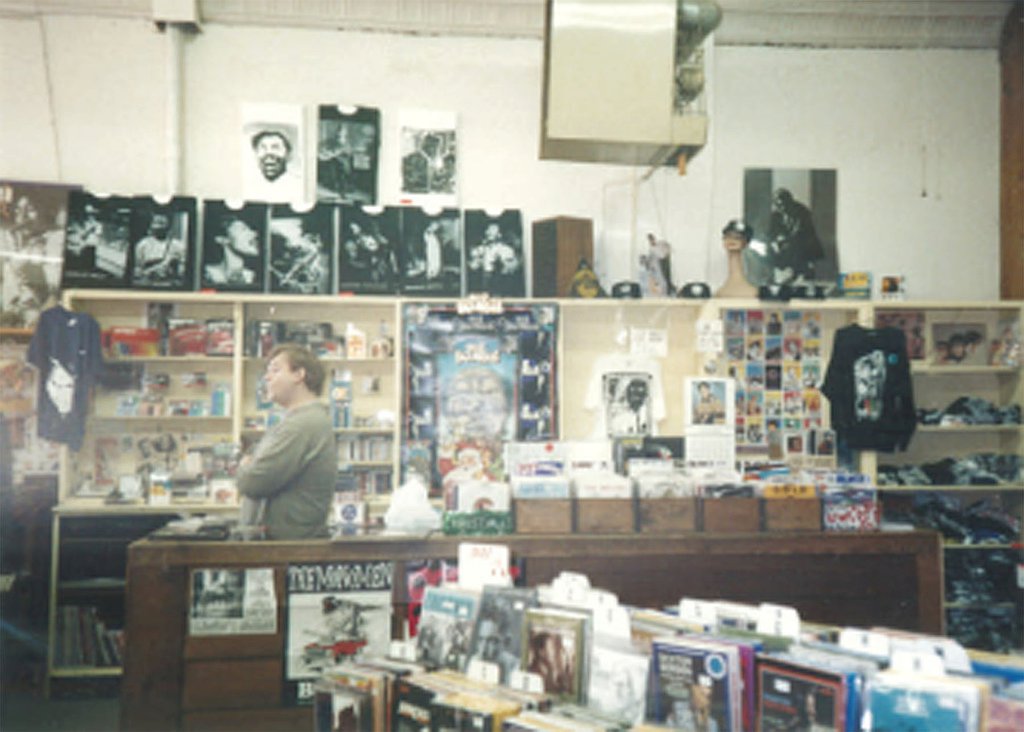 Interior of Flipside Records, c.1990-1995. Photo: Amy Stevens
Article written by Ryan Gage, Kalamazoo Public Library staff, January 2025
Sources
Articles
“The Kalamazoo Mall at 30”
Kalamazoo Gazette, 13 August 1989, page H1, column 1
“Flipside flips sides with new record store”
Kalamazoo Gazette, 22 January 1995, page E3, column 1
“Old-time disc store spins into history”
Kalamazoo Gazette, 13 July 2001, page A1, column 2
“Hands across Eleanor: An oral history of a unique downtown Kalamazoo business corner”
Second Wave Southwest Michigan, 16 January 2025
Online
Footage of the Flaming Lips playing inside of Flipside Records