Reading Together, Art, and the Stories We Still Carry
"Art is kind of the gateway to a lot of healing."
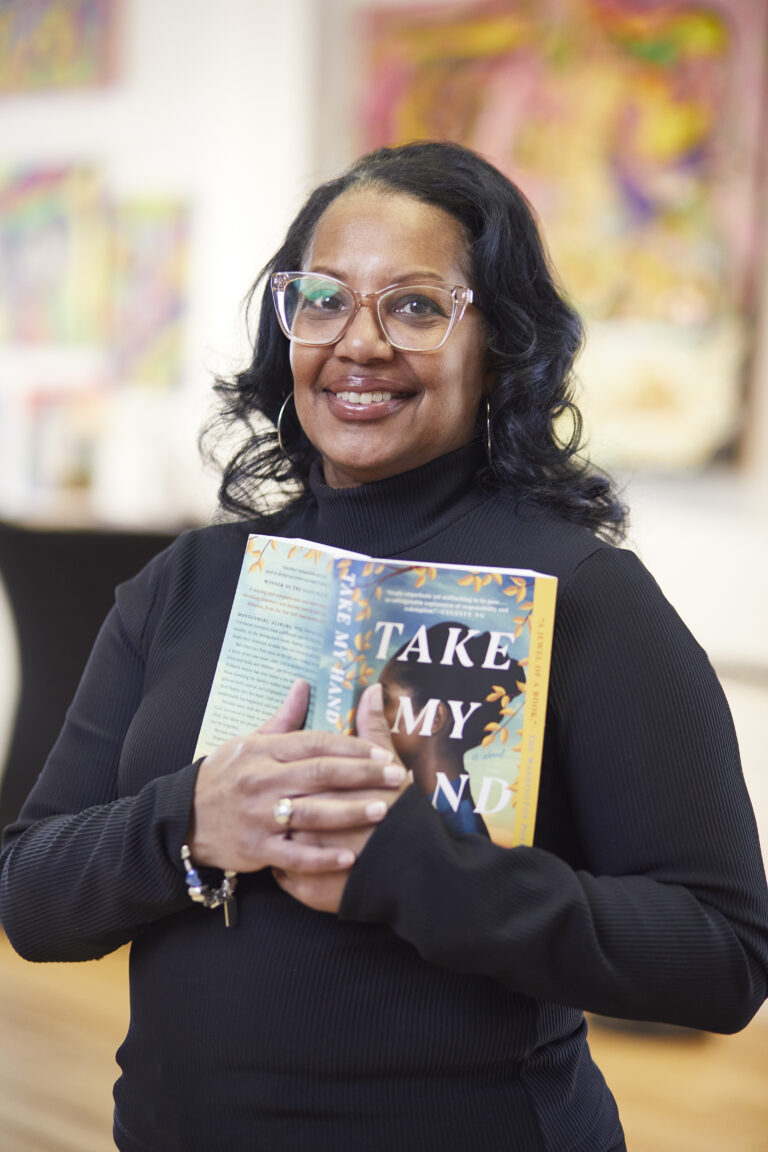
When Kalamazoo Public Library selects a book for its Reading Together program, the goal is not simply shared reading. It is shared reflection — an invitation for the community to pause and talk about the stories that continue to shape our lives.
This year’s selection,Take My Hand by Dolen Perkins-Valdez, does exactly that. Based on real events, the novel explores medical racism, bodily autonomy, and the long shadow of decisions made without consent. Though set decades ago, its themes remain deeply present.
For Janine Seals, Executive Director of the Black Arts and Cultural Center, that relevance was the reason to say yes to becoming a Reading Together partner.
As Seals began reading the book, she was struck by how familiar its realities felt. “It’s interesting that some fifty years later,” she said, “we’re still suffering with the same situations when it comes to healthcare.” Black women continue to navigate healthcare systems where they are often dismissed or not fully heard.
Those disparities are well documented. According to the Centers for Disease Control and Prevention, Black women in the United States are more than three times as likely to die from pregnancy-related causes as white women. Research has also shown that these inequities persist regardless of income or education level — meaning Black women with college degrees and higher economic status still experience worse maternal outcomes than white women with fewer economic advantages. These patterns point to systemic failures in care, not individual circumstance.
For Seals, Take My Hand is an educational entry point. Many stories like this were never widely told, living quietly within families and communities rather than public record. “There’s probably hundreds of stories like this that are out there,” she reflected. By bringing one of those stories into public conversation, the book invites readers to engage with difficult truths and to continue the discussion.
That shared commitment is what drew the Black Arts and Cultural Center into partnership with Kalamazoo Public Library. Through Reading Together, the library creates space for community-wide conversations, while partners like the Black Arts and Cultural Center extend those conversations into cultural and creative settings. Together, the collaboration allows stories like Take My Hand to be explored not only through reading, but through dialogue, reflection, and community engagement.
“So often,” she noted, “women will go to the doctor and say, ‘I think this is what’s going on with my body,’ and they’re sent on their way.” That gap between knowing something is wrong and being believed remains a critical issue.
The novel also touches on themes beyond healthcare, including how young Black girls were treated as adults, their childhood dismissed or erased. That adultification continues to affect how Black children are perceived and protected today. As Seals explained, many young people grow up quickly out of necessity. “They’re put in positions where they have to,” she said. “If mom doesn’t work, you don’t eat. You don’t have lights. You don’t have a roof over your head.”
These are difficult truths, but Seals believes art offers a way to hold them.
“Art is kind of the gateway to a lot of healing,” she said. At the Black Arts and Cultural Center, art is not only about what is displayed on the walls. It is a process — one that allows people to express pain, joy, grief, and resilience in ways that feel accessible. “There’s a way to express yourself and your pain and your trauma through artwork,” she explained.
That belief shapes programming at the Center, from youth comic-making workshops to restorative healing and grief support through creative expression. In one program, young people create comic characters that act as alter egos — revealing fears, struggles, or hopes they might not yet have language for. “I always ask the kids, ‘If you could be a superhero, what would your superpower be?’” Seals shared. “That tells you a little bit about what they’re dealing with.”
For Seals, art reflects the realities people are living every day. “It’s an imitation of real life in so many areas,” she said.