 eBook
hoopla Instant
eBook
hoopla Instant
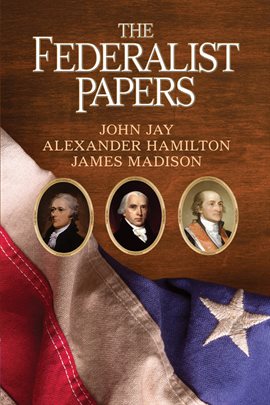
The Federalist Papers
Year
2025
Language
ENGLISH
Publication Information
G&D Media
Summary
ONE OF THE MOST IMPORTANT HISTORICAL COLLECTIONS OF ALL TIME Alexander Hamilton, James Madison, and John Jay wrote this collection of eighty-five articles and essays in favor of ratifying the United States Constitution in 1787. Under the pseudonym "Publius." they first appeared as a series of letters which were sent to New York newspapers and were intended to explain the complexities of a constitutional government-its political structure and principles based on the inherent rights of man and to influence the vote in favor of ratifying the new Constitution. Scholars regard this work as a milestone in political science and a classic of American political theory. The authors were three of the greatest politicians and political thinkers in United States history. James Madison is generally credited as the father of the Constitution and became the fourth president of the United States. Alexander Hamilton was an active delegate at the Constitutional Convention, and became the first Secretary of the Treasury. John Jay, helped negotiate the Treaty of Paris of 1783 ending the American Revolution and after winning British recognition of American independence, he became the first Chief Justice of the United States. Though centuries old, these essays remain the benchmark of American political philosophy and political science. As eloquently stated by famed historian Richard B. Morris, The Federalist Papers serve as an "incomparable exposition of the Constitution, a classic in political science unsurpassed in both breadth and depth by the product of any later American writer."